2026 HOF inductees

- 2026 inductees
Balsiger, Chuck
Bray, Mark
Carter, BJ
Carter, Jimmy
Cirillo, Anthony
Colver, Mike
Crise,Sherman “Red”
Engelking, Ken
Ferrell, Jamie
Gibb, Jason
Gasaway, Burt
Gifford, Rick
Greenzweig, Barry
GKCA/(IKF)
Griffith, Ben Ray
Hand, Bruce
Harris, Phil
Hovorka, Joe
Jensen, Donald
Johnston Smith, Denise
Kanemoto, Erv
Keller, Rick
Knapp, Dave
Kurpiewski, La
- 2026 inductees
Balsiger, Chuck
Bray, Mark
Carter, BJ
Carter, Jimmy
Cirillo, Anthony
Colver, Mike
Crise,Sherman “Red”
Engelking, Ken
Ferrell, Jamie
Gibb, Jason
Gasaway, Burt
Gifford, Rick
Greenzweig, Barry
GKCA/(IKF)
Griffith, Ben Ray
Hand, Bruce
Harris, Phil
Hovorka, Joe
Jensen, Donald
Johnston Smith, Denise
Kanemoto, Erv
Keller, Rick
Knapp, Dave
Kurpiewski, Larry
Kuntze, Julie
Lehmann, Dave
Lumello, Dan
McDonald, Jerry
McDonald, Don
McDonald, Dave
- 2026 inductees
Meyers , Walt
Meyers, Johnny
Milliken, Doug
Muller, Peter
Nields, Tom
Nields, Rusty
Reed, Matthew
WKA
Salyer, Scott
Teflos, Johnny
Thompson. Adam
Thompson, Andy
Tull, Rod
Tull, Neal
TNT Kartways
Van Fossen, Rich
Waller, Chad
Wester, Jim
Wiggins, Harr
Wilkerson, LeRoy
Wilson, Dick
Verlengiere, Art
Verlengiere, Rod
Vera, Joe
Yamane, Jimmy
Lifetime Ac
- 2026 inductees
Meyers , Walt
Meyers, Johnny
Milliken, Doug
Muller, Peter
Nields, Tom
Nields, Rusty
Reed, Matthew
WKA
Salyer, Scott
Teflos, Johnny
Thompson. Adam
Thompson, Andy
Tull, Rod
Tull, Neal
TNT Kartways
Van Fossen, Rich
Waller, Chad
Wester, Jim
Wiggins, Harr
Wilkerson, LeRoy
Wilson, Dick
Verlengiere, Art
Verlengiere, Rod
Vera, Joe
Yamane, Jimmy
Lifetime Achievement
Neal, Junior
"Paul Gallitero”
Spirit of Karting Award
Bohle, Scott
2026 go kart hall of fame inductees
Chuck Balsiger
At Go Kart Hall of Fame, we honor the rich history and evolution of go karting, tracing back to the early 1950s. Chuck Balsiger, was a pioneer in the Southern California go kart scene, transforming empty parking lots into racing venues. Inspired by his passion. Back in the day Chuck raced at Harbor Raceway (just East and across the "river" from Ascot Park in Gardena CA). Some dirt track racing at the ¼ mile track of Ascot, Azusa Raceway, Riverside, a track that I don't remember that well out of Bakersfield CA and a track in Las Vegas at I believe was the Hacienda Hotel.
Dad was not shy about being shy. As I believe I said in an earlier email ...we ran Alcohol and oil. We were rebuilding per event or "heat". The press, on lookers and the sort, were drawn towards dad's Yamaha kart. They'd ask him all sorts of questions and he'd politely send them over to Duffy's pit or a racer named Bill Wollard to talk about karting ...again, dad was fine with being the quiet guy in the background ...off track.
We ran two karts in C class. Our Yamaha and a series of C class test karts for what I believe was sponsorship by West Bend and Mcculloch. We weren't near as fast with those karts. The sponsor may have been Azusa Engineering.

"paul Gallitero" spirit of karting award
Scott Bohle
The “Paul Gallitero” Spirit of Karting Award honors those who make karting more than a sport—those who build community, inspire others, and keep the passion alive. Tonight, we honor Scott Bohle.
A cornerstone of the Southern California karting scene, Scott was a fierce competitor on the dirt ovals and an even greater presence off the track. Racing throughout the SoCal Oval Karters circuit, he was a consistent front-runner in F200 and KT100 classes at Perris Auto Speedway, Wheel2Wheel Raceway, and beyond. His skill and determination earned respect from rivals and teammates alike.
As founder of Bohle Racing, Scott built more than a team—he built a family. He shared his knowledge generously, mentored the next generation including his daughter Tyler Rose, and helped countless newcomers find their footing. Whether offering setup advice, lending a hand in the pits, or simply welcoming racers with a friendly word, Scott made everyone feel like they belonged. To many, he didn’t just race—he made the track feel like home.
Though we lost Scott in 2025 and his family is unable to be here tonight, his spirit lives on in every racer he helped and every friendship he forged. For his passion, generosity, and lasting impact, it is our honor to present Scott Bohle with the 2026 Paul Gallitero Spirit of Karting Award.

Mark Bray
Our next inductee into the Go Kart Hall of Fame is Mark Bray, a lifelong contributor whose impact spans decades behind the wheel and years of leadership that shaped karting at the highest levels. Mark began his karting journey in 1966 at Snow’s Silvercreek Raceway in San Jose, California. A year later he crossed the Atlantic to England, racing from 1967 to 1970 at Rye House Raceway with Zip Karts, gaining invaluable international experience during the sport’s formative years.
On his return to the United States Mark moved north and continued competing at the old Medford track in the early 1970s. From sprint racing to road racing and later vintage karting, his dedication to competition never wavered. Equally impressive was his commitment off the track. Mark served as Race Director for multiple IKF Nationals, Medford, Pats Acres, New York and Hanford’s Dirt Nationals, directed PKA Pro events, and contributed significantly to SKUSA Super Nationals and numerous regional races.
His steady leadership, technical knowledge, and passion for developing the sport have left a lasting legacy. Tonight we celebrate a true steward of karting. Please join me in welcoming Mark Bray into the Go Kart Hall of Fame. Thank you.
B.J. Carter
Age: 60.
Started racing karts at age 8
5 - IKF Duffy’s
3 - Tulsa Shootout Drillers
Raced speedway dirt oval racing along with some asphalt sprint tracks, street racing and indoor coke syrup racing.
Won many races in the JR division all over the Midwest and then carried that over into the adult classes.
Won his first IKF 2-cycle Speedway Grand Nationals in 1980 at Derby, IA. Finished 2nd the year before in Texas at Devil’s Bowl Speedway racing against Billy Boat.
In the late 80’s was able to race against his dad “Speedway Jimmy” on many occasions, but the Tulsa Shootout would be the most memorable time.
Worked at Speedway Jimmy’s kart shop growing up and racing at RAAH Speedway.
Jimmy Carter
Jimmy Carter Racing Bio
Jimmy Carter aka “Speedway Jimmy”
Oskaloosa, Iowa
Age: 79
Started racing karts at age 10
9 – IKF Duffy’s
3 – Tulsa Shootout Drillers
Raced karts all over the country. Primarily speedway dirt oval, but also did asphalt sprint tracks, street racing and indoor coke syrup racing.
Winning the IKF 2-cycle Speedway Nationals in 1979 at Devil’s Bowl Speedway in Texas put him on the map.
From Derby Iowa to a dirt track on the front stretch at Charlotte Motor Speedway he won about everything there was to win in speedway racing. He was always raising the bar to make the competition bring their “A game” to the track.
Owned and operated RAAH Speedway in Oskaloosa, IA from 1979 to 1990. Promoted street races and indoor races all over the Midwest.
Held the IKF 2-cycle Speedway Grand nationals in 83 and 87
Tony Stewart won in 83 at age 10
Owned and operated Speedway Jimmy’s Kart shop from 1975 to 1990.
One of Margay’s largest dealers when selling the “Bandito” back in the 80’s.
Tony Cirillo
Tony Cirillio’s impact on karting is a testament to passion, vision, and a lifelong commitment to growing the sport from the inside out. Beginning his journey in 1981 as a competitor in the WKA Gold Cup series, Tony quickly recognized its potential and worked to elevate not only the competition, but the entire karting community.
By 1982, he had already stepped into a leadership role, working directly with WKA and serving as the New York State 4-Cycle Representative. He became a true voice for racers, advocating for their concerns while helping shape rules, structure classes, and grow the 4-cycle program into one of the organization’s strongest divisions. His service as Trustee, Treasurer, Secretary, and Sprint Director reflects his deep commitment to the sport.
Tony’s influence extended far beyond leadership through his work as a writer. His coverage of the WKA Gold Cup—later the Horstman Gold Cup—brought national recognition to racers and sponsors, while his column “The Stroke” offered insight, personality, and perspective that engaged the karting community. He also promoted grassroots racing across the Northeast, ensuring local racers received the recognition they deserved.
Tony is unable to be with us this evening, but he was proudly presented his Hall of Fame plaque last week at the VKA event in Barnesville, Georgia. His voice as an announcer and his continued efforts in promoting karting, including the CKNA East Series, show a dedication that never faded.
For decades of service, storytelling, and leadership, Tony Cirillio is a deserving member of the Go Kart Hall of Fame.

Sherman "Red" Crise
In 1959, the inaugural World Karting Championship was incorporated into the Nassau Speed weeks. The event was promoted by the now defunct Grand Prix Kart Club of America and organized by Captain Sherman 'Red' Crise, the then and only ever President of the club.
The races were contested at Oakes Field (former Nassau Airport) on a track marked out using what looked like short hedge cuttings inserted into holes at the track edge. The meeting took place on December 5 and 6.
The feature race that year was held at night (actually it was in the wee hours of Sunday morning) and was won by Go Kart Hall of Fame inductee Jimmie Yamane driving a twin McCulloch MC10 powered kart that he had self constructed.
Towards the end of 1960 Captain Crise organized a team of American Karters to race in England at the Shenington circuit near Banbury, Oxfordshire, followed by a meeting in Italy at the Kart Pista Rossa near Milan. Those races plus a third meeting at Nassau were promoted as rounds of the 1960 World Karting Championship. Following the Nassau event Bobby Allen a 2025 Go Kart Hall of Fame inductee was crowned World Karting Champion driving a Fox kart powered by dual McCulloch MC20s.
Crise’s adventure to Europe was notable in that his team of drivers introduced American karts and motors to another sizeable market. Crise’s Grand Prix Kart Club of America certainly promoted the USA group, outfitting team members with matching blazers and slacks as well as red, white and blue sleeveless racing jackets.
In early 1962, karting in the USA unfortunately took a downward turn which caused Captain Crise to give written notice of his decision to suspend all racing and organizational activities of the GPKC of America. No sanctions would be issued nor would insurance of any type be in effect. Captain Crise went on to say that, he, the President of the splendid Grand Prix Kart Club of America, would be directing all his future efforts into raising the finest Boxer dogs in the world, at his new kennels in Rancho del Toro Rojo, Florida.
Captain Sherman F "Red" Crise, was a Floridian entrepreneur, race car and karting promoter, sports car racer, and politician who organized the powerboat races from Miami to Nassau during the late fifties and the Nassau Speed weeks that lasted well into the sixties decade. Captain Crise died on May 3, 1991 aged 82.
Through all of his endeavors, Sherman “Red” Crise remained a driving force behind the growth and promotion of motorsports. His founding of the Grand Prix Kart Club stands as a pivotal moment in karting history—an effort to bring order, safety, and credibility to a young sport on the rise. For his vision, leadership, and enduring contributions to motorsports and karting alike, Sherman “Red” Crise rightfully earns his place in the Go Kart Hall of Fame.

Ken Engelking
Ken Engelking’s lifelong dedication to karting is a story of passion, mentorship, and an unbreakable connection to the sport. A true racer at heart, Ken not only chased victories on the track but helped shape champions and inspire generations along the way. His journey reflects the very essence of karting—competition, perseverance, and the desire to pass knowledge forward.
Ken’s impact on the sport was cemented when Jim Teflos entrusted him with a unique and meaningful challenge: to mentor his young son, Johnny, and develop him into a national-caliber driver. Accepting the opportunity, Ken committed himself fully—not only as a coach, but as a teacher and role model. The result was extraordinary. Under Ken’s guidance, Johnny Teflos rose to become the 1974 and 1975 IKF National Champion, later earning his own place in the IKF Hall of Fame. Their partnership, which lasted over a decade, stands as a testament to Ken’s ability to develop talent and instill the mindset required to succeed at the highest level.
While mentoring future champions, Ken continued to pursue his own racing career across a wide spectrum of motorsports. From karts to sports cars, stock cars, super modifieds, mini stocks, and Texas dwarf cars, his versatility and competitive spirit never wavered. Yet, no matter where racing took him, karting remained at the center of his passion.
Remarkably, that passion still burns today. At 83 years old, Ken Engelking continues to race karts, embodying a lifelong commitment to the sport that few can match. His enduring presence serves as both inspiration and proof that the love of racing knows no age.
For his achievements as a racer, his profound impact as a mentor, and his lifelong dedication to karting, Ken Engelking is a deserving inductee into the Go Kart Hall of Fame.
Jamie Ferrell
37 IKF 2 Cycle Speedway Duffy's, 11 Tulsa Shootout Drillers, Multi Newton Speedway track Champion.
Jamie Ferrell’s name is synonymous with excellence, consistency, and dominance in the world of karting and speedway competition. With a career highlighted by an extraordinary list of accomplishments, Ferrell has established himself as one of the most successful and respected drivers in the sport’s history.
A fierce competitor on the national stage, Jamie captured an incredible 37 IKF 2-Cycle Speedway victories at the prestigious Duffy’s events—an achievement that speaks to both his skill and longevity at the highest level of competition. His success continued at one of the most competitive dirt racing events in the country, the Tulsa Shootout, where he earned 11 coveted Driller trophies, further cementing his reputation as a driver who thrives under pressure on racing’s biggest stages.
On the local level, Ferrell’s dominance was equally impressive. As a multi-time Newton Speedway track champion, he consistently set the standard for performance, becoming a driver that others measured themselves against. His ability to win across different tracks, events, and conditions showcases not only talent, but a deep understanding of the sport.
Jamie Ferrell’s career is defined by winning, but also by perseverance, adaptability, and a relentless pursuit of excellence. His achievements have left a lasting mark on karting and speedway racing, inspiring competitors and fans alike.
For his outstanding accomplishments and enduring impact on the sport, Jamie Ferrell is a deserving inductee into the Go Kart Hall of Fame.

Phil Harris
Phil Harris represents the very spirit of grassroots karting—innovation, determination, and a relentless drive to compete at the highest level regardless of resources. From the earliest days of his career, Phil proved that success in racing is not defined by equipment, but by ingenuity and skill. Much of his karting career was built on machinery others had cast aside, which he meticulously rebuilt, refined, and transformed into race-winning equipment. Designing and building his own engines and expansion chambers, Phil embodied the true craftsman racer.
His journey in motorsports began in 1956 in quarter midgets, where he quickly found success and laid the foundation for a lifetime in racing. Over the decades, his talents extended far beyond karting, competing in micro midgets, full midgets, sprint cars, late model sportsman—where he captured a track championship in 1983—and numerous other dirt track divisions. Yet, karting remained at the core of his passion and greatest achievements.
Phil’s karting résumé is nothing short of remarkable. A multi-time IKF Division Champion across sprint, enduro, and speedway disciplines, he earned championships throughout the 1970s and beyond, including standout performances at the IKF South Central Winter Nationals and repeated victories at the Buffalo Lakes Enduro. His versatility and competitiveness carried into later decades, where he captured multiple IKF Road Race Grand National titles from 1999 through 2009, as well as KART National Championships—proving his excellence across generations of equipment and competition.
Beyond his personal accomplishments, Phil’s influence on the sport is deeply rooted in mentorship and knowledge-sharing. His partnership with Wayne Brown is a testament to this legacy. What began in 1970 as a mentorship—teaching basic mechanical skills—evolved into one of the most successful collaborations in karting. Under Phil’s guidance, Brown became one of the nation’s premier engine builders, and together they achieved numerous national-level successes.
Phil Harris’s career is defined not only by championships and victories, but by resilience, creativity, and a commitment to helping others succeed. He is a racer, a builder, a teacher, and a pioneer of the do-it-yourself spirit that defines karting at its core. For his extraordinary achievements and lasting impact on the sport, Phil Harris is a truly deserving inductee into the Go Kart Hall of Fame.
Larry Kurpiewski
The late Larry Kurpiewski won 2 National Championships in 250cc Gearbox. He was the Idaho IKF governor for decades.
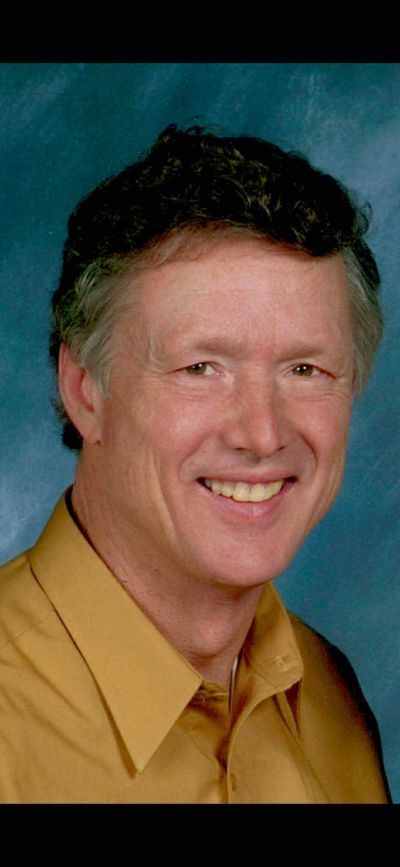
Dave Lehmann
Began racing in 1969 in the rookie junior class at Mountain highway raceway in Spanaway, WA on a Bug kart with a Mac 49.
I ended up racing karts in Seven decades and won more than 200 races!
I won many club and regional championships in both sprint and road racing and a National Championship Road racing in 2004 .
In 1975 I spent a week as a guest of the Emmicks. Then after graduating in 1978, I drove down to Sacramento and stayed with the Emmicks and worked in the shop. We did three local races and went together to the Grand nationals at Oklahoma City. What a great experience with a great, fun loving family!
In the 80's I raced on Invader sprint and road race karts.
In 2002 I put on the first ever Rotax Max Challenge race at Richland, WA.
In 2004 I designed and built my own Road race kart, the X-15 and won the IKF Grandnationals at Portland.
I raced in two Supernats! 2015 and 2018
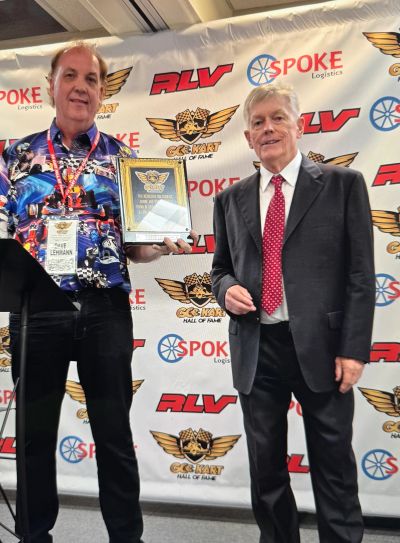
Tom Nields
Tom Nields’ journey in karting is one defined by passion, craftsmanship, and a relentless pursuit of excellence that has impacted the sport at every level. What began in the mid-1970s as a young boy restoring a Tecno kart with his father quickly grew into a lifelong pursuit that would leave a lasting mark on karting history.
From his early days racing at KRC in Oxnard and Indian Dunes, Tom immersed himself in the sport—learning from legends, studying the craft, and competing against some of the best drivers of his era. By the late 1970s, he was already making his presence known, earning his first Duffy and building a reputation as both a talented driver and a dedicated student of karting.
That dedication soon evolved into mastery. By the age of 18, Tom had become a skilled engine builder and tuner, leading to the creation of TNR—his own company dedicated to building winning equipment. Through TNR, Tom not only achieved personal success, including 15 Duffy victories across sprint, enduro, and speedway, and two WKA Road Race World Championships at Daytona, but also helped shape the future of the sport by developing equipment and mentoring drivers who would go on to reach the highest levels of motorsports.
Tom’s influence extended beyond driving, serving as a development driver for Horstman and contributing to innovations that advanced karting technology. His career reflects a rare combination of driver, builder, and innovator.
Today, Tom’s legacy comes full circle, returning to the track with the same passion that started it all. For his achievements, contributions, and lasting impact, Tom Nields is a deserving inductee into the Go Kart Hall of Fame.
Bruce Hand
Bruce Hand’s career in karting is a powerful reflection of consistency, competitiveness, and success at the highest levels of the sport during one of its most competitive eras. From the late 1960s through the early 1980s, Hand established himself as a formidable presence in road racing, earning top finishes at many of the most prestigious tracks and events in the country.
Beginning with an early victory at Carlsbad in 1967 and a strong showing at the Kent, Washington Nationals the same year, Bruce quickly proved he could compete on a national stage. Over the next decade, he built an impressive résumé that included victories and podium finishes at iconic venues such as Willow Springs, Riverside, and Ontario. His performances were marked by both speed and consistency, with standout wins at Riverside, Willow Springs, and multiple Ontario events, as well as a prestigious victory at the 1978 WKA Daytona Nationals.
Bruce’s excellence extended beyond individual races into championship success. Competing in the highly competitive Southern California Karting (SCK) C Open class, he earned multiple championship podium finishes, capturing the title in 1979 and again in 1981, while finishing runner-up and third in other seasons. His sustained success in one of karting’s toughest regions underscored his skill and determination.
In recognition of his talent and sportsmanship, Bruce was honored with the Troy Ruttman Jr. Award in 1979—further solidifying his reputation as one of the sport’s elite competitors.
Bruce Hand’s career is defined by his ability to consistently perform against top competition, his success at premier events across the country, and his lasting impact during a formative period in karting history. For his achievements and contributions to the sport, Bruce Hand is a deserving inductee into the Go Kart Hall of Fame.
Denise Johnston Smith
Denise Johnson Smith’s induction into the Go Kart Hall of Fame recognizes a career defined by passion, perseverance, and a meaningful contribution to the sport of karting. Though she cannot be with us tonight, she is deeply honored by this recognition—an honor that reflects the respect and admiration she has earned throughout her journey in racing.
Denise’s presence in karting helped pave the way for others, demonstrating that determination and love for the sport transcend all barriers. Her dedication, both on and off the track, made a lasting impression on competitors, fans, and the karting community as a whole. She competed with heart, carried herself with professionalism, and embodied the spirit of sportsmanship that defines the very best in karting.
Beyond competition, Denise’s legacy is found in the relationships she built and the inspiration she provided to those around her. She represents the many individuals whose contributions go beyond trophies and results—those who help grow the sport through passion, commitment, and character.
Tonight, we celebrate Denise Johnson Smith for her achievements, her influence, and the path she helped forge in karting. It is with great respect and appreciation that we welcome her into the Go Kart Hall of Fame.
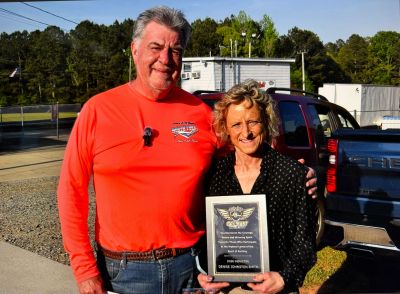
Jim Wester
Written by Phil Harris 2026 Go Kart Hall of Fame inductee.
At this past weekend’s Vintage Kart Show/ Get Together/Surprise Birthday Party at Mike Jones’ Dallas Karting Complex, I had the opportunity to help celebrate the 79th birthday of one of the best karters the sport has ever seen. If you have raced Enduro, Sprint, or Speedway you more than likely know the name Jim Wester. He raced it all from the late 50’s or early 60’s until just a few years ago. Fast and a super driver are two terms to describe Jim. His nine IKF National Championships came from all three divisions: sprint, enduro , and speedway. There aren’t many races that have that on their resume. In addition to being a great racer, he is a great person. Jimmy has now been chosen to be a member of the Go Kart Hall of Fame and will be inducted on May 1. As you can see from the picture, the recent years have seen him in a wheelchair, but it sure hasn’t crushed his awesome spirit. We had some great races against each other over the years. What a great weekend. What a great person.
Dick Wilson
Dick Wilson opened the Lamar County Raceway in 1959. In Barnesville, Ga the track was best known for some of the largest 2-cycle and 4-cycle races in karting history. The Barnesville Winter Nationals were legendary. With Dick as the track owner/promoter they became a karting staple to kick off the season in March. In 1971 Dick was instrumental in the formation of the World Karting Association. The first WKA race ever held was at Barnesville in 1972. It was a huge success. Thanks to the trust and commitment Dick had for the organization the WKA sprint program was well on its way.
As the years went on Dick helped grow and manage the Horstman Gold Cup Series as well as the early years of the WKA National Dirt Program. You cannot talk about the early history of WKA without mentioning Dick Wilson. Dick passed away in 2004 but the mark he made on the sport of karting and WKA will live on forever.
Johnny Teflos
Among the outstanding competitors of karting's golden era, Johnny Teflos earned a reputation as one of the sport's most gifted and respected drivers. Through talent, discipline, and an unwavering commitment to excellence, he established himself as a national champion and a role model whose influence continues to be remembered decades later.
Born and raised in Houston, Texas, Johnny's introduction to karting came at an early age. His father, Jim Teflos, a pioneer of Texas karting and owner of Houston's first professional go-kart track, recognized his son's remarkable potential and sought the guidance of renowned racer and instructor Ken Engelking. Beginning at just seven years old, Johnny received the foundation that would shape one of the finest driving careers of his generation.
His talent developed quickly, and by the mid-1970s, Johnny had become one of the premier drivers in the country. He reached the pinnacle of the sport by capturing back-to-back International Kart Federation National Championships in 1974 and 1975, a remarkable accomplishment that firmly established him among America's elite competitors. Known for his smooth driving style, exceptional race craft, and relentless attention to detail, Johnny approached every race as a student of the sport, constantly refining his skills and searching for every competitive advantage.
Whether racing at Houston's legendary Meyer Speedway and Playland Park or competing against the nation's top drivers in Margay and Hornet karts, Johnny consistently demonstrated the professionalism and determination that earned the admiration of competitors across the country. His ability to combine speed with intelligence made him one of the most formidable racers of his era and a respected ambassador for the sport.
Although Johnny Teflos passed away in 2005, his legacy continues through the countless racers he inspired and the Texas karting community that proudly remembers his accomplishments. His championships, sportsmanship, and passion for karting remain a lasting part of the sport's rich history.
For his outstanding achievements as a two-time IKF National Champion, his dedication to excellence, and his enduring contributions to American karting, the Go Kart Hall of Fame proudly honors Johnny Teflos as a member of the Class of 2026. His legacy will forever stand among the champions who helped define the history of karting.

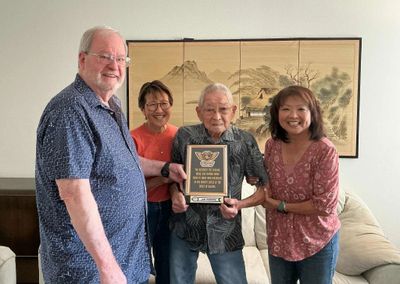
Jimmy Yamane
Jimmie Fusaji Yamane passed away on October 23, 2025, peacefully in his home in Yorba Linda with his daughters by his side. He leaves his brother, Teddy (Midori) Yamane; two daughters -- Marion (Rod) Nishimura and Joanne (Steve) Ishii; grandchildren -- Erin (Brian) Soohoo, Brandon (Nathalie) Morinaka, Craig (Taylor) Ishii, Nolan (Kristen) Nishimura, Colby Nishimura and Traci Ishii; and
great- grandchildren - Avery, Owen, Violet, Aiden and Casey and many cousins and other relatives. Jimmie is predeceased by his dear wife,
Kazie, and brother, Bobby (Michi) Yamane. From 1950 to 1967, Jim worked as a technician in the Production
Development Department at McCulloch Motors, in Inglewood.
McCulloch Motors at the time was known for making smaller engines for lawnmowers and chainsaws. It was during his time at McCullough; Jim became interested in karting. What started as a fascination evolved into a serious venture. Using McCullogh engines, he designed, built and drove his own go-kart competitively. This would lead him to Nassau in the Bahamas where he won the first World Go-karting Championship with Kazie (Pictred in photo) as his sole pit crew member. He continued racing competitively for four years until he injured his
leg in a crash ending his racing career. After McCullogh, Jim found a position at UCLA as a welder-machinist in the Physics Department where he helped fabricate machinery for research needs. He would work at UCLA
from 1967 to 1991 before retiring. His karting legacy became well publicized with numerous articles written in Karting magazines and even in the Rafu Shimpo. Currently his karting legacy is on display at a Japanese American National Museum special exhibit called "Cruising-J Town" in Pasadena.
He will beinducted into the Go Kart Hall of Fame in 2026. Jimmie always loved competition -- racing motorcycles, playing cards with friends, bowling, ping pong, golf, poker and blackjack. He went to Pechanga almost up until a few weeks before
the end of his life. Competition was in his blood and that's what made him happy.