a great article about early karting in texas
Early Karting by Sandy Shepard
Art Ingels is credited with creating the first Kart in 1956. He worked for Glendale Cal. based Kurtis Craft Co. who built racing cars. A friend, Duffy Livingstone, copied his creation and with Bill Rowles and Roy Desbrow among others, started the Go Kart Mfg. Co. in Azusa. Their Go-Kart 400, with a Clinton 2 hp engine, sold for $164.50. They raced in
the Rose Bowl parking lot until 1958, when the first kart track, Go Kart Raceway, was built next to the shop.
In 1959 American Jimmie Yamane won the first World Karting Championship for McCulloch Corp. of Los Angeles followed by another American, Bobby Allen in 1960 and 1961 in a revolutionary aluminum monocoque kart called the Xterminator built in Grand Prairie, Texas by aircraft manufacturer Ling-Temco-Vought. Lake Speed was the last
American to win a World Karting Title, in 1978, as of this writing.
The late 50's and the early 60's saw an explosion of karting that pales today’s growth. It seemed like everybody with a welder was building a go-kart. But the DFW area had no safe place for people to ride their karts. People in Denton, Texas drove their karts at the Santa Fe depot, located at Interstate 35 and Oak St. Other people around North Texas used
parks and parking lots, and a few people just used neighborhood streets, with sometimes dire consequences.
As demand increased, DFW needed someone to invest in a safe place for people to enjoy their karts. Mr. R. L. Huey finally stepped up and constructed the first racing go-kart track, north of Carrollton on I-35E in an old gravel pit, and called it The North Texas Go-Kart Raceway Association. The track was supported by its large rental kart business, and local karters who paid a dollar for a day’s use. Rental prices were fifty cents for 5 minutes, and the lines were long.
Complete racing karts cost around $350 back then with a maximum engine price of $100 for an A class engine. The karts were mostly made with steel tubing and were quite rudimentary. The engines were of the mass produced industrial variety. The chainsaw versions were the lightest and produced the most horsepower. As a comparison, a modern kart can
cost over $10,000. At first only 2 stroke engines were allowed. Quarter midget racers of the time were spending huge amounts of money on 4 stroke engines and karting was started as an inexpensive alternative.
Transportation of the racing karts was usually done in the trunk of a car. Few urban residents owned pick-ups and even fewer people had a suitable trailer. The cars of the day had fins and trunks large enough to sneak several high school boys into the localdrive-in theater undetected.
In Denton, the go-kart popularity did not go unnoticed. Denton's mayor Frank Barrow and builder Jack Bruton formed a partnership and constructed Denton's first go-kart track. Costing $20,000 to construct, the Denton Karting Speedway opened up June 19, 1960, 1/2 mile north of State highway 24 (US380 now) on Interstate 35 to great fanfare. Featuring a
seven hundred foot straight, more than a quarter mile of twisting turns and a total length of one-half mile, the Denton Karting Speedway proved to be very popular. The track was surrounded by farmland in 1960, and was considered out in the country. With no neighbors to disturb, the Denton Karting Speedway became quite successful, drawing on the two
local universities and kart racers who came from as far away as Oklahoma. Rental karts and race karts shared the track at the same time, except on Sundays, which were race days. The biggest rental business occurred on Friday and Saturday nights. With few exceptions, the renters and kart racers co-existed well. Rue Simmons, the track manager, emphasized to
everyone to be aware of each other; and John Hodnick, the track mechanic, guaranteed there were always plenty of rental karts to dodge. Regular Sunday race days showed good crowds similar to the hundred or so of today, and Jimmy Cobb always gave you a fair start and a full twelve laps no matter how hot or cold it was that day. The Grand Opening featured
ladies from the Denton Women’s Club, local college faculty, and a large number of teachers for a "Grandmothers Lap." Racing in the track's rental karts, Mrs. Josh Roach was the first person to take the checkered flag. The ladies had a great time, and the general expression was "That was fun-can I ride again?"
1961 saw the North Texas Go-Kart Raceway Association acquire a new owner E. F. White and a new name, the Wizzer Kart Track. The United States had a Supreme Court justice named Byron White who was nicknamed "Wizzer White"because of his college football career. E.F. White, no relation, also picked up the nickname from his friends. Looking
for a simpler name, Mr. White decided to call his new acquisition The Wizzer Kart Track.
The proliferation of karting had increased enough to support eight tracks in just the Dallas-Ft. Worth area alone. Those tracks were: Wizzer Kart Track, the Denton Karting Speedway, Valley View, 77 South, Rendon, Southwest, J&J Kart Track and Fayben, a quarter midget track, located in Garland. These tracks worked together on scheduling so that a
person could race almost every night of the week. I know some karters who individually collected close to 400 trophies during 1961, but I don't know if any of them ever graduated from high school.
Denton had its own club, the Road Runners, and the dominant club, from Dallas, was the Big D Pacers. These clubs began as loose organizations, mainly social in nature with few goals. As early karting expanded, the clubs took on more
responsibility helping with race management, and organizing racing junkets to other tracks out of the area.
By early 1962, the Wizzer Kart Track had new owners once again. Dr. James Avann, Dr. Fred Popkess and Floyd McKenna, all kart racers, purchased the track to give it some stability. The new owners contracted with the Big D Pacersto conduct the races and maintain the track for a very small fee. With several other kart rental tracks located closer to
Dallas, the rental kart business at Wizzer had become marginal and was discontinued.
Once a year the Big D Pacers joined with popular Dallas radio station KLIF to hold their annual disc-jockey race at Wizzer, to publicize and promote Karting. The karts were furnished, with some trepidation, by club members. Dave Ambrose was the hot-shoe disc-jockey winning most of these events. Close calls, a few wrecks, and some engine
problems were the order of the day. The crowds were very large tying up traffic on I-35E for miles in either direction. It was all good fun and the exposure for karting was invaluable.
To break up the monotony of racing the same way every weekend, the club organized turkey races at Thanksgiving, shoe races, and backwards races. Coupons for turkeys were substituted for trophies during Thanksgiving. The shoe races required a driver to remove one shoe and put it in a pile at the starting line. The drivers lined up on the short straight in
front of the pits and had to run half-a-lap, get their shoe, put it on, and run back to the kart before the kart could be started. Some drivers were already pretty worn out by the time they got back to the kart and still had ten laps to go. The backwards races were normal races in reverse direction which gave the drivers a change of pace.
By 1963 sprint karting had reached its peak, but racing endurance karts on sports car courses, at 100mph for over an hour, was still on the rise. At that time, most enduro racers also raced sprint, and the turnout for a sprint race would
Some enduro karts could exceed 140mph in 1963 be greatly affected when the schedule conflicted with an enduro. Within the Big D Pacers, there was turmoil between
road racers and sprint racers, which finally came to a boil in the mid-sixties. The sprint racers formed their own club, The North Texas Karters, leaving the Big D Pacers to become the enduro club.
As sprint karting continued its decline, and development expanded in the area, race tracks of all kinds disappeared under housing subdivisions. The Denton Karting Speedway itself fell victim, closing in 1963. In less than ten years, most tracks were gone, and DFW was left with only one kart track. Dentonites were forced to travel 25 miles south to the
Wizzer Kart Track. With the demise of the Denton Karting Speedway, the Denton Road Runners drifted apart. Some joined the Dallas club, while others dropped out of karting altogether. As the years went by, enduro karting declined enough that the Big D Pacers disbanded and eventually were represented by a new organization, Southwest Road Racing.
By the late eighties, as the Metroplex continued to expand, the Wizzer Kart Track became a valuable property and alegal liability to the owners. With the threat of lawsuits skyrocketing, the owners made the painful decision to close the only kart track in the north Texas area before a lawsuit destroyed everything. The North Texas Karters, who had enjoyed
30 years of track access for very little expense, suddenly found themselves with the realization of driving to Waco or Oklahoma City to race. Endurance racers did this once a month at GP motorcycle and sports car tracks all over the Southwest, but this was completely new to the sprint contingent that raced locally every weekend. Faced with having to
drive 150 to 200 miles to a track to race each weekend, and the sure demise of the club, the members committed to build their own track so this would never happen again. After a long painstaking search, and financial commitments from
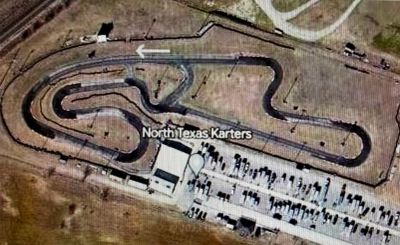
members, the North Texas Karters purchased six and one-half acres of land just north of Denton on I-35 adjacent to the Santa Fe railroad, with options on more space, and constructed the North Texas Kartway.
North Texas Kartway Denton Texas 2000s After much hard work from members, NTK was eventually expanded to 16 acres, and offers a lighted track and paddock for night racing, covered pits, electronic timing, concessions, restrooms with showers and motorhome parking
with electrical access. The North Texas Kartway has evolved into a National Championship hosting facility evoking memories of another half mile track just a few miles south and some years past.
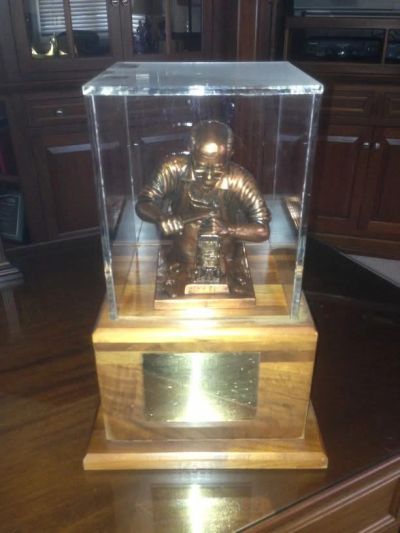
The Lou Borelli Award
The Lou Borelli Award, IKF's Road Racing, Highest Award for Mechanical Excellence.
1974 Jim Teflos - Indianapolis Raceway
1975
1976
1977 Jerry Bowsman
1978 Steve O'Hara
1979 Steve O'Hara
1980 The Winkler Family
1981
1982. Terry Hegar Manufacturing
1983. Kathy Hartman
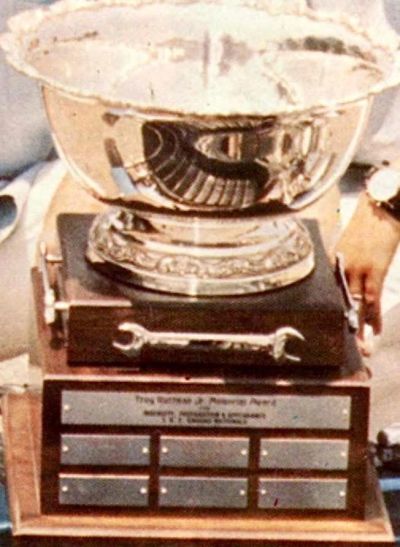
The "Troy Ruttman Jr Memorial Award
Created by Marshal Robbins owner of the Super Modified that Troy Jr lost his life in. Troy was an outstanding Go Kart racer before following in his father's footsteps moving to auto racing.
The Troy Ruttman Jr. Award for Innovation (frequently referred to as the IKF Troy Ruttman Jr. Award) is a specific honor recognizing exceptional engineering, mechanical design, and innovation within vintage and enduro go-kart racing.
1975
1976
1977 - Terry Hegar
1978 - Pete Muller
1979 – Bruce Wenz/Bruce Hand
1980 -Mark Arenal
1981 -John Hooper
1982 – Dave McDonald
1983 – Ernie Fisher
1984 – Mike McAndrews / Russ Jennings
1985 – Willy LaGrone
1986 – Scott Bassett
1987
1988 - Marc Diedrich
1989 – Dale Thompson
1990
1991 - Dave Clark. Topeka IKF Grandnaytionals
1992 – Buddy & Wally Wallen
1993
1994 – Tim Gilbert
1995 – Todd Zeitler
1996
1997
1998 – Christopher Lee Hegar
2017 - Jason Lorang, Richie Warren and Dave Clark