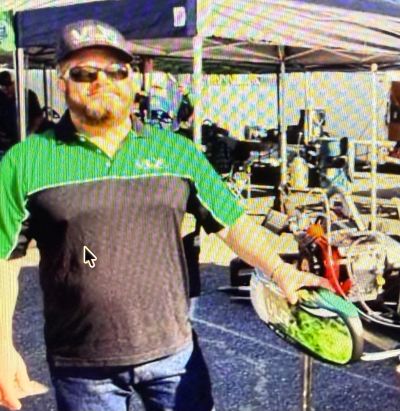
Art Verlengiere
Art Verlengiere’s impact on karting is one that has been felt in every corner of the sport—from the racetrack to the engine shop, and throughout the entire racing community. As we welcome him into the Go Kart Hall of Fame Class of 2026, we honor a man whose dedication, innovation, and support have helped shape karting for over four decades.
As the founder and co-owner of RLV Tuned Exhaust Products, Art built one of the most respected companies in karting. Based in Santa Maria, California, RLV became a cornerstone of the industry, producing high-performance exhaust systems that racers across the country—and around the world—have relied on to compete and win. His deep understanding of engine tuning, especially in areas like exhaust backpressure and flex length, has helped countless drivers find speed and performance.
Alongside his brother Rod, Art didn’t just build a business—he helped build the sport. Through RLV, they supported racers at every level, formed key industry partnerships, and provided the equipment that kept karting moving forward. His leadership extended into organizations like the International Kart Federation, where he served and contributed to the governance and growth of the sport.
Beyond his technical and professional achievements, Art and his brother have been major corporate sponsors of the Go Kart Hall of Fame, helping ensure that the history and legacy of karting are preserved and celebrated.
Art Verlengiere represents innovation, leadership, and unwavering support for karting.
Please welcome Art to the podeum to accept his Plaque For his contributions to the industry, his leadership, and his commitment to the sport, Art Verlengiere is a proud and deserving inductee into the Go Kart Hall of Fame Class of 2026.
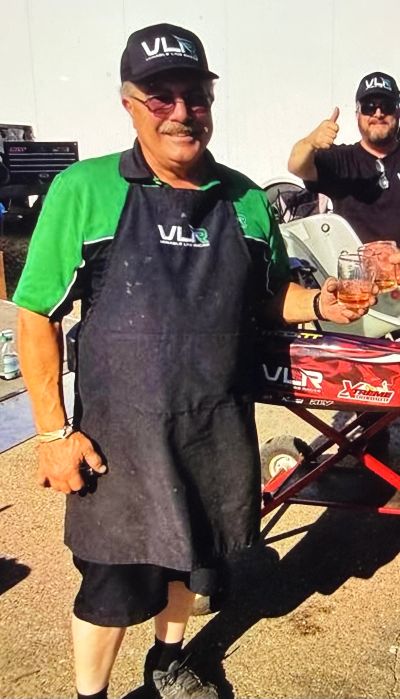
Rod Verlengiere
Rod Verlengiere’s name is one that has become synonymous with performance, innovation, and dedication to the sport of karting. As a member of the Go Kart Hall of Fame Class of 2026, we recognize a man whose influence has been felt both behind the wheel and throughout the entire karting industry.
Rod’s journey began in 1980 at Kartsville in San Diego, where his passion for racing quickly turned into a pursuit of something greater. Dissatisfied with the limitations of available equipment, he began building his own components—driven by a desire for more speed, more reliability, and better performance. That pursuit led to the creation of RLV Tuned Exhaust Systems, a name that would become an industry standard.
Alongside his brother Art, Rod helped grow RLV into one of the most respected manufacturers in karting. From tuned pipes and silencers to a wide range of performance components, their products have powered racers at every level—from grassroots competitors to national champions. Rod’s early innovations, including influential designs like the “Blimp” pipe, helped set new standards in exhaust performance.
Beyond modern racing, Rod has remained deeply committed to preserving karting’s history, supporting the vintage karting community with authentic reproduction parts and continued involvement in the sport.
Rod is unable to be here with us tonight, but it is our honor to have his brother Art here to accept this award on his behalf.
For his innovation, his leadership, and his lasting contributions to karting, Rod Verlengiere is a proud and deserving inductee into the Go Kart Hall of Fame Class of 2026.
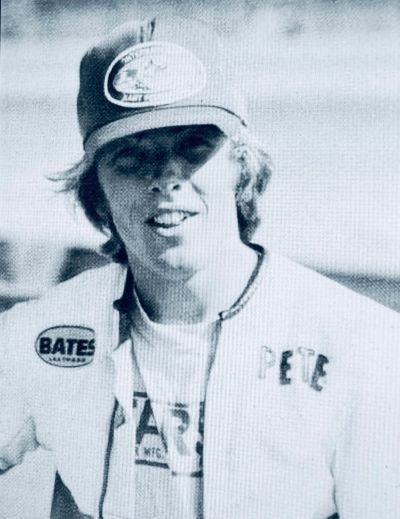
Pete Muller
Was primarily a road racer and only did a little sprint karting. He won Open Light at the 1978 IKF Nationals on a chassis he built from scratch powered by Doug Henline’s one of a kind water cooled rotary valve engine. For his efforts that year he was the winner of the Troy Ruttman Award for excellence in design and construction. The following year Pete won Stock Appearing Light and Stock Appearing Heavy at the Ontario IKF Nationals. Pete was well known as an extraordinary machinist and became well known to shops and engine builders across the country and abroad for his incredibly accurate service of realigning the main bearings in any 2-cycle engine used in karting. Pete and Sonny Van Hook established and ran the very first online bulletin board for karting way back in the mid 90s and it was the place to go for karting information and communication. He was an accomplished coder and handled all the HTML code for the bulletin board. Pete has been self employed as a high level machinist all his life and has a nice collection of CNC machines in the basement shop under his house in California. He has been a prolific contributor to the online karting community for decades sharing his intimate knowledge of the 2 cycle engines and how to blueprint them for the best performance.
Walt Meyers
Walter Allan “Walt” Meyers was more than a racer—he was a pioneer, an innovator, and one of the true architects of modern karting. Born in 1934 and raised in Southern California, Walt’s passion for speed and machinery began early and never left him. He once described himself simply as “an engine nut,” but those who knew him understood that his relentless curiosity and drive to make things faster would go on to shape the sport in profound ways.
Walt entered karting in 1960, starting with a simple used kart and a small engine, but there was nothing simple about what followed. As a driver, builder, and engineer, he quickly became one of the most dominant engine builders the sport has ever seen. Through Meyers Speed Shop, Meyers Racing, and Meyers Racing Engines, he developed powerplants and innovations that racers across the country depended on to win.
His influence extended far beyond the engine. Walt designed racetracks, helped establish safety standards, served on the IKF Board of Directors, and authored So You Wanna Go Fast, sharing his knowledge with generations of racers. His ingenuity even reached beyond karting, engineering specialized engines for reconnaissance drones when others said it couldn’t be done.
The IKF once retired its own Master Mechanic Award rather than continue presenting it to the same individual—a testament to Walt’s unmatched excellence.
Though Walt passed away in 2019, his legacy lives on in the sport he helped build. Tonight, accepting this honor on his behalf is his son, Allen and his daughter Eve. It is our privilege to welcome Walt Meyers into the Go Kart Hall of Fame.

TnT Kartways, Quincy, ILL
Among the most historic venues in the sport of karting, few tracks can rival the legacy of TNT Kartways. For more than four decades, the circuit stood at the center of American kart racing, hosting national championships, professional events, and one of the most significant moments in the sport's history—bringing karting to a national television audience.
In 1966, TNT Kartways became the site of a landmark broadcast when ABC's Wide World of Sports featured kart racing before millions of viewers. The iconic broadcast team of Jim McKay, serving as announcer, and Roone Arledge, directing the production, introduced the excitement of karting to the nation. It remains the only time the sport has appeared on one of America's three major television networks, making the event a defining moment in karting history.
TNT Kartways had already established itself as a premier venue years earlier. In 1962, it hosted a Grand National event sanctioned by Karting International (KI). When KI merged with the GKCA in 1963 to form the International Kart Federation (IKF), TNT continued to play a central role in the growth of the organization and the sport.
No track in history hosted more IKF Two-Cycle Grand Nationals than TNT Kartways. Between 1966 and 1994, the facility welcomed eleven IKF Two-Cycle Grand Nationals, held in 1966, 1970, 1972, 1973, 1975, 1976, 1980, 1982, 1983, 1984, and 1994.
The 1975 Grand Nationals became one of the largest events in karting history, attracting a record 612 entries, a mark that stood for many years. During that era, TNT also hosted the prestigious Pro 5000 events in conjunction with Grand National week. Lynn Haddock captured the Pro 5000 victory in 1975, while Terry Traeder earned the win in 1976. Additional Pro 5000 races preceded the Grand Nationals in 1980, 1982, 1983, and 1984.
TNT Kartways also hosted two IKF Four-Cycle Grand Nationals in 2001 and 2003, further demonstrating the facility's enduring importance to the sport.
Beyond IKF competition, the track welcomed the World Karting Association Grand Nationals in 1978 and hosted two KART (Karters of America Racing Triad) Grand Nationals in 1997 and 1998.
In total, TNT Kartways was the site of an extraordinary seventeen Grand National events—eleven IKF Two-Cycle, two IKF Four-Cycle, one WKA, and two KART championships, in addition to countless state and regional races. Generations of drivers, families, mechanics, and fans made memories there, helping shape the history and growth of karting in America.
For its unparalleled record of championship competition, its role in bringing karting to national television, and its lasting contribution to the sport, TNT Kartways stands as one of the most important venues in the history of American karting and is a deserving member of the Go Kart Hall of Fame Class of 2026.